Introduction
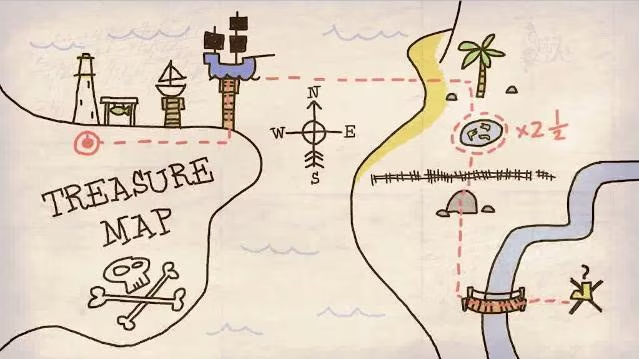
Technology in education is necessary to engage students and prepare them for the future. Geocaching, the game of electronic treasure seeking, provides a lively and interactive way to mesh technology with the outdoors. This resource supports the: NESA (NSW) curriculum, helping students to develop their problem-solving and team work skills as well as critically think. How to Add Electronic Treasure Hunts into Teaching and Learning Situations is a resource that explains ways in which educational settings can make good use of geocaches.
Understanding Electronic Treasure Hunting
Geocaching is an outdoor recreational activity, in which participants use a Global Positioning System (GPS) receiver or mobile device and other navigational techniques to hide and seek containers, called “geocaches” or “caches”, anywhere in the world. Search participants take with them to find hidden containers, or “geocaches,” using latitude and longitude coordinates. Some bucky in these caches are usually some trinkets or a log for hunters to sign. This task supports students’ use of technology when looking at external environments.
Connecting Treasure Hunting to the Curriculum Overdraft Charge
Electronically guided treasure hunts incorporate into multiple subjects and offer diverse learning styles.
Geography: Students are taught to use GPS devices and gain an understanding of coordinates, maps and spatial awareness. This hands-on experience helps bring geography and it’s concepts to life!
Math’s: Measuring distances, decoding coordinates, using scales are some of the real life applications for integrated math’s in treasure hunting.
Science: Students can discover new habitats while hunting and experience ecosystems and species diversity in greater depth for their scientific knowledge.
Physical Education: Get out and move while walking, hiking or biking to locate geocaches. It promotes exercise and outdoor play.
If You Want to Give Electronic Treasure Hunting a Try
Planning and Preparation
The first step is to decide where you will be conducting the treasure hunt. Verify that the space is safe for students and accessible to them. Include them in the planning, explaining how much it matters to have respect for nature and knowing safety rules.
Teaching the Basics
Teach students what GPS is and how it works. Train them in the use of GPS to find coordinates or how to use a smartphone app. Chat about the ethics of geocaching, things like “leave no trace”.
Designing the Treasure Hunt
Develop a set of geocaches with an educational message or challenge involved. Have questions or puzzles related to the subject for them to solve that will lead them to each successive cache. This is a method that helps students learn their curriculum interactively.
Conducting the Hunt
Split students up in to small groups with equipment (time for us it was hiking backpacks, an emergency blanket made for 2 people, and a large container of water) Promote teamwork and cooperation as they move to each geocache. Teacher pose as facilitators, and provide hints or support if necessary.
Reflecting and Debriefing
Combine students together after the hunt, and have a discussion about their experience. Ask them to consider what skills they employed and what they learned. This debriefing enhances learning and feedback.
Benefits of Electronic Treasure Hunting
Engagement and Motivation: Treasure hunts are exciting for students, they enjoy doing them.
Development of skills: Students improve problem solving, thinking and technology skills. They’re learning to work well in teams and express their ideas.
Environmental Awareness: Encountering the natural is a great way to integrate an awareness of nature in general, and the animals that live there.
Cross-Subject Integration: The exercise is a natural fit for a variety of other subjects for an interdisciplinary learning experience.
Challenges and Considerations
There are also difficulties to be overcome in electronic treasure hunting, despite the fact it has many advantages.
Safety: Ensure adequate supervision and risk assessments to maintain safety for the students throughout event.
Accessibility: Think about everyone’s needs including people with disability to ensure the session is inclusive and enjoyable for all involved.
Access to Technology: Make sure there is equitable access to GPS devices or apps. Expect technical troubles and make a plan to get through it.
Conclusion
Geocaching offers an avenue in NSW to bring the two fields of technology and outdoor activity together. Through such interactive exercise, it is possible for educators to develop key competencies and implant love of learning in the mind of young learners. Geocaching is a great way to employ technology, group thinking and real life applications in education. “The adoption of this innovative methodology is enhancing not only the educational experience but also the educational journey, to ensure our students are prepared for a world where technology and exploration are equal partners.”